
2026 Seed Grant Recipients
Investigating whether magnetotactic bacteria are linked to toxic metal sequestration within an acid mine drainage in Northeast Ohio
Investigators: Dr. Courtney Wagner (Department of Earth Sciences), Dr. David Singer (Department of Earth Sciences), and Dr. Min Gao (Advanced Materials Liquid Crystal Institute).
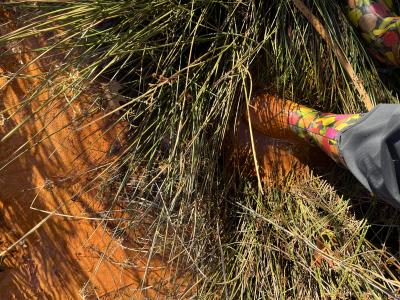
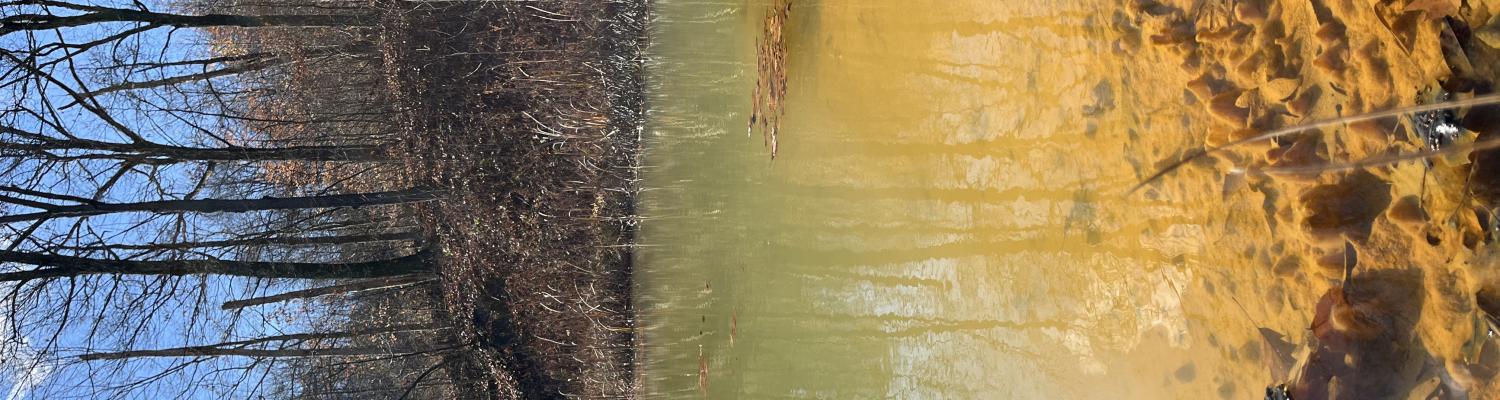
This project investigates whether magnetotactic bacteria (MTB) in an acid mine drainage (AMD) system in Northeast Ohio are potentially linked to the sequestration of toxic metals, particularly cobalt. Acid mine drainage, a byproduct of coal mining, produces acidic, metal-rich waters that threaten ecosystem and human health. While the direct chemical impacts of AMD are well studied, far less is known about how microbial processes influence iron cycling, toxic metal behavior, and long-term ecosystem dynamics in these environments.
Magnetotactic bacteria are uniquely suited to address this question. These microorganisms produce intracellular magnetic minerals (magnetite or greigite) that can incorporate trace metals and are preserved after death as magnetofossils. Because these magnetic particles can be detected using non-destructive magnetic techniques, they provide a powerful tool for linking microbial activity to geochemical processes. Preliminary work in the Huff Run Watershed has already identified magnetite-producing MTB and revealed possible cobalt enrichment associated with their magnetic particles. Unexpected magnetic signatures in sediments further suggest that either particle arrangement or cobalt substitution may be influencing the magnetic record鈥攔aising important implications for interpreting ancient environments on Earth and potentially Mars.
Primary Research Aims:
Test whether MTB absorb and sequester cobalt in AMD environments.
Seasonal sampling will determine whether cobalt concentrations correlate with MTB abundance and cobalt incorporation into their magnetic particles, especially during spring runoff when metal concentrations peak.Link microbial activity to magnetic mineral signatures.
By combining microscopy, elemental analyses, and room- and low-temperature magnetic measurements, the project will determine whether observed magnetic signatures reflect particle arrangement, cobalt substitution, or both.Use magnetic minerals as indicators of ecosystem health and biogeochemical zones.
The research will assess whether MTB, magnetofossils, and associated iron minerals can serve as proxies for chemical stratification, diagenetic zones, and toxic metal dynamics within AMD systems.Advance broader implications for early Earth and planetary science.
Because AMD environments serve as analogs for Early Earth and Mars, this work will improve interpretation of magnetofossils as biosignatures in the geologic record and in extraterrestrial environments.
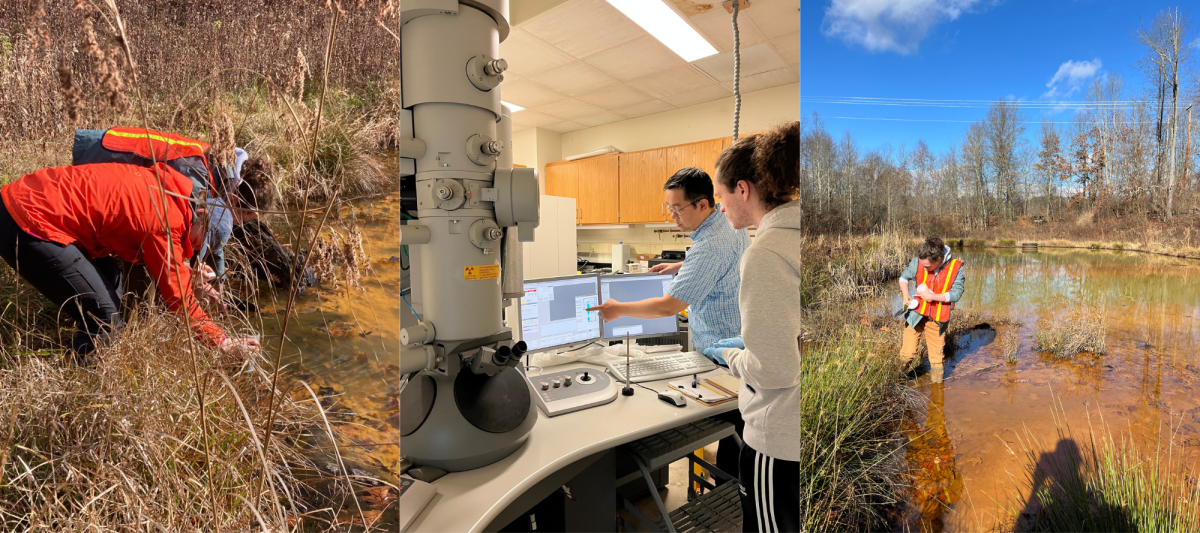
Overall, this project integrates microbiology, geochemistry, and rock magnetism to evaluate whether magnetotactic bacteria play an active role in toxic metal sequestration in human-impacted environments. This is the first time that anyone has looked at the potential of the bacteria to absorb cobalt outside of the laboratory or other controlled setting. By establishing seasonal baselines and refining magnetic detection tools, the research will contribute to AMD remediation strategies while also strengthening the use of magnetic biosignatures to detect life in ancient and planetary systems.