Department of Physics

Beyond the Eclipse: A Cosmic Conversation with Kent State Alumna Beth A. Cunningham
Join Beth A. Cunningham, Ph.D., a distinguished physicist and Kent State University alumna, as she unravels the mysteries of the cosmos and shares her insights on the latest in space exploration and the scientific wonders of solar eclipses. Ahead of her highly anticipated presentation on the day of the eclipse, this is your chance to explore the universe through the eyes of an expert who stands at the forefront of astronomical discovery and education.
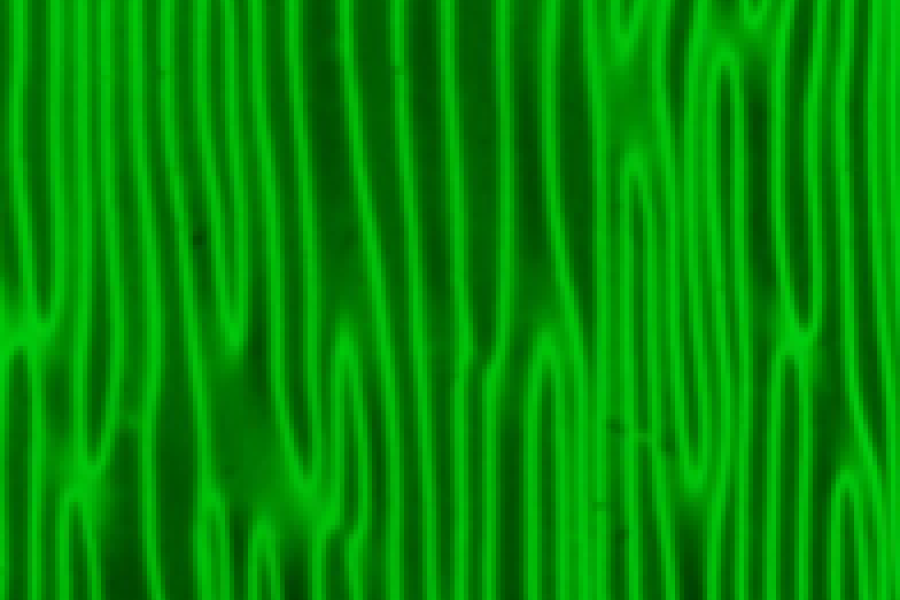
Dr. Oleg Lavrentovich and collaborators publish an article in Science on ferroelectric liquid crystals
Dr. Lavrentovich, professor of Physics at Kent State University, and collaborators publish an article in Science.
Dr. Oleg Lavrentovich and collaborators publish an article in Science on ferroelectric liquid crystals
Dr. Lavrentovich, professor of Physics at Kent State University, and collaborators publish an article in Science.

Lecture Hall, Event Space, or Night Sky?
Did you know we have a planetarium? Well, we do. Smith Hall at Kent State University is home to this versatile room that can be used for classes, events and can even replicate an easier-to-see version of the night sky.

Dr. Zhangbu Xu joins the Kent State University Department of Physics faculty
The Kent State University Department of Physics is proud to welcome our newest faculty member, Dr. Zhangbu Xu.

New Publication in Physical Review X Reveals Surprising Connection Between Liquid Crystals and Metals
A groundbreaking study published today in Physical Review X, titled "Frank-Read Mechanism in Nematic Liquid Crystals," sheds light on a fundamental connection in the behavior of nematic liquid crystals and crystalline solids. Led by a team of researchers from Kent State University, the study reveals…
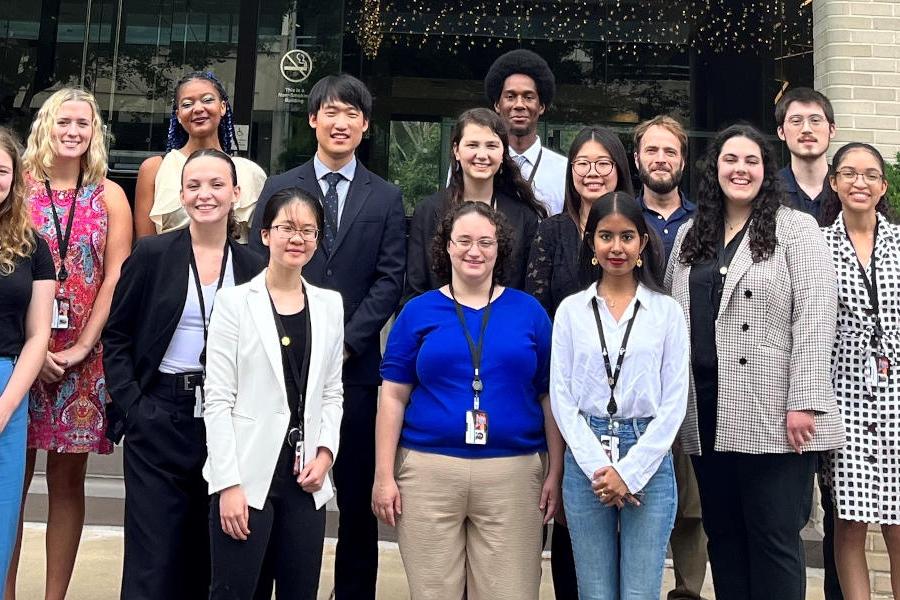
Reaching for the Stars: Physics Major Participates in 'Dream' Internship
The NASA-affiliated Space Telescope Science Institute (STScI) in Baltimore, Maryland, was founded in 1981 as the home base for Space Telescope operations. Now, it similarly functions as the center for science operations of the Hubble and James Webb Space Telescopes (JWST). The institute offers in…

Professor Leads Cutting-Edge Physics Research
Supported by grant funding from the U.S. Department of Energy, Kent State physics professor Michael Strickland, Ph.D., and his team have developed the world’s leading approach to describe non-equilibrium evolution of highly relativistic systems.
Physics professor receives a DOE topical collaboration grant to study heavy-quark physics
Dr. Michael Strickland's group will participate in a new Topical Theory Collaboration funded by DOE’s Office of Nuclear Physics to explore the behavior of heavy flavor particles. The collaboration will receive $2.5 Million from the DOE Office of Science, Office of Nuclear Physics, over five years. That funding will provide partial support for six graduate students and three postdoctoral fellows at 10 institutions, as well as a senior staff position at one of the national laboratories. It will also establish a bridge junior faculty position at Kent State University.

Research Update: Studying neutron stars with gravitational waves
Neutron stars are some of the densest objects in the universe, and as such, the conditions at the cores of these extreme objects are impossible to reproduce on Earth. However, we can use data from the Laser Interferometer Gravitational Wave Observatory (LIGO) and the Virgo gravitational wave detector to gain insights into the physics of neutron stars.